/ Sep 12, 2026
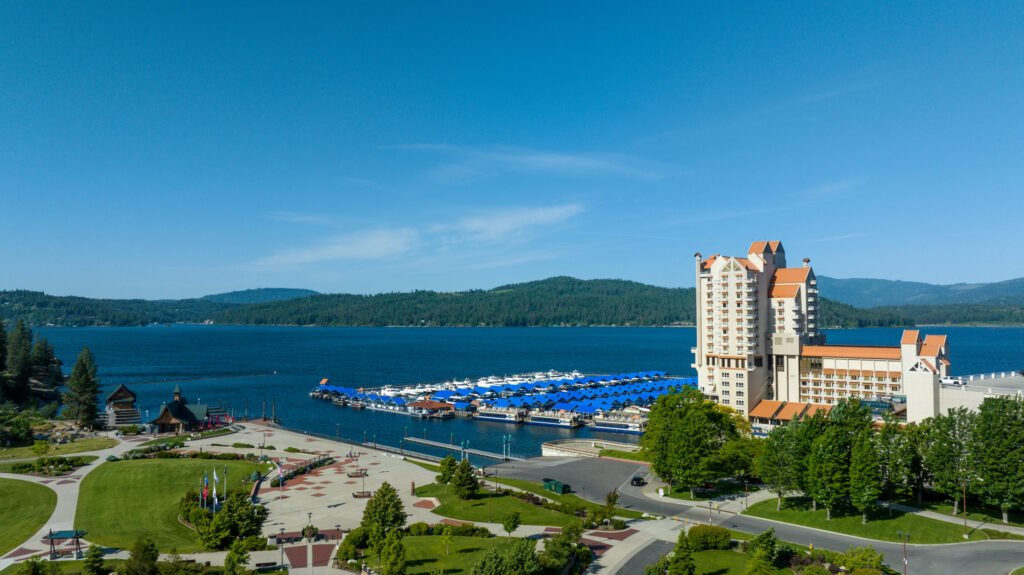
The best corporate retreat venues align with your goals, make travel simple, and deliver flexible, tech-ready spaces that encourage connection and focused work. Planners are prioritizing wellness, hybrid capabilities, and distinctive environments that inspire teams, with lakefront and mountain settings leading many shortlists.
Retreat demand is growing fast, and venue choice now determines outcomes as much as programming. Use the framework below to match venue types to objectives, compare lakefront, mountain, coastal, urban, and boutique options, and plan booking timelines for 2026. We spotlight Pacific Northwest standouts, including The Coeur d’Alene Resort’s extensive meeting infrastructure, to help you balance productivity with only-at-the-lake experiences.
Venue is not a backdrop; it shapes energy, engagement, and outcomes. Distinctive settings, flexible rooms, and seamless tech support elevate collaboration and reduce friction.
Retreat momentum is rising, with the segment at about $31.8B in 2024 and forecast to hit $73.7B by 2034, so competition for high-impact spaces is increasing according to Corporate Retreat Statistics. Employee appetite matters too: 83% consider corporate travel a benefit, making on-site experiences a lever for culture and retention, as noted in Corporate Retreat Statistics 2024.
Three factors drive success: alignment with objectives, accessibility for your team, and facility quality. Planners are elevating wellness, with more than half prioritizing attendee well-being alongside DEI and sustainability according to What’s Ahead for 2024 Meetings and Events. Venues that enable hybrid sessions, offer natural light, and provide unstructured gathering spaces outperform generic rooms that limit connection and creativity.
Start with goals, then choose the environment that supports them. This approach keeps the agenda, space plan, and activities cohesive and measurable.
Retreat platforms note that coastal and waterfront settings unlock creativity and collaboration, while mountain and forest venues excel for focus and adventure.
Lakefront venues pair inspiring views with full-service amenities, which supports both deep work and decompression. Over half of companies even prefer beachside retreats, a signal that water settings resonate with teams according to Corporate Retreat Statistics.
A premier Pacific Northwest choice on Lake Coeur d’Alene with flexible, hybrid-ready spaces and world-class amenities. The resort offers approximately 25 event rooms and more than 32,000 square feet of meeting space, as detailed in Meetings at The Coeur d’Alene Resort. The Hagadone Event Center provides up to 6,270 square feet of indoor-outdoor space with theater capacity up to 576, or 13,000 square feet with patio for larger events, according to Venues at The Coeur d’Alene Resort. Seven boardrooms with natural light support smaller strategy sessions.
For multi-day programs, the property offers:
Best for: leadership summits, hybrid all-hands, culture-building offsites.
A Pacific Northwest lakefront retreat with direct access to more than 5,000 acres of surrounding mountains, forests, and glacier-fed lakes, ideal for wellness and outdoor-forward agendas, as described by The Premier Location for Corporate Meeting Retreats in the Pacific Northwest. Best for: wellness-centric leadership offsites and creativity sprints with built-in nature breaks.
A lakeside venue with flexible packages and casual gathering spaces suited to team bonding and small offsites. Best for: regional teams seeking lakeside connection without complex travel logistics.
Mountain and forest venues promote deep work and adventure, making them strong fits for strategic planning, training, and leadership development.
A luxury mountain retreat that hosts corporate groups up to approximately 66 guests, pairing privacy with high-touch service as highlighted by Group Retreats: Meetings. Best for: executive offsites and leadership programs where setting and seclusion matter.
Forest Suites Resort and the Coachman Hotel in South Lake Tahoe are frequently cited for access to trails and alpine activities that complement creative sessions and team challenges. Best for: brainstorming sprints and cross-functional workshops.
You get mountain views, lake access, and extensive meeting infrastructure with easier access than many remote lodges. A 35-40 minute transfer from Spokane International Airport keeps travel simple for distributed teams.
Coastal properties are popular for culture-building and post-project celebrations. Over half of companies prefer beachside retreats, which aligns with demand for oceanfront experiences according to Corporate Retreat Statistics.
Oceanfront access with conference facilities makes this a fit for teams blending strategy with beach time. Best for: sales kickoffs and culture resets.
Full-service amenities and beach proximity support executive sessions by day and oceanfront bonding by night. Best for: recognition retreats and hybrid formats.
Urban hotels excel at accessibility and cultural immersion for distributed teams, often reducing travel time and simplifying late-stage planning, as explained in the Company Retreat Locations Guide.
Resort destinations like The Coeur d’Alene Resort remain accessible, with a short drive from a major airport, while providing a distinctive lakeside setting that typical city hotels cannot match.
Boutique properties, ranches, and estates deliver memorable, hands-on experiences. Capacity is limited, which increases intimacy and focus.
Designed for connection and focus, this ranch-style venue emphasizes AV-supported meeting spaces, breakout flexibility, and outdoor activities for executive teams. Best for: strategic planning and leadership alignment.
Capacity up to approximately 66 guests underscores boutique benefits and limitations, ideal for small-group excellence as described by Group Retreats: Meetings. Best for: confidential strategy and relationship-building.
Well-being is a top meetings trend, with more than half of planners naming wellness as central to event design according to What’s Ahead for 2024 Meetings and Events. Choose venues with spa services, outdoor access, and nourishing dining.
Evaluate venues through the lens of goals, travel logistics, and technical reliability to avoid last-minute compromises.
Reduce travel friction by choosing regions that align with your team’s distribution while still delivering a meaningful change of scenery.
Clarify objectives and start venue outreach 6-12 months in advance to secure peak dates and align space with goals, as recommended by How Far in Advance Should You Plan a Company Retreat?. Earlier planning improves room blocks, meeting space selection, and rate leverage.
Use a clear question set to avoid hidden costs and operational surprises. While specific policies vary by venue, these prompts keep negotiations focused.
Retreat ROI increasingly ties to measurable outcomes like engagement ratings, turnover metrics, innovation inputs, and post-retreat productivity according to Corporate Retreat Statistics 2024. Align venue choice with success criteria, then let the setting work for you.
Start venue outreach 6-12 months in advance to secure peak dates and ensure the best selection of meeting spaces. Earlier planning also helps with room blocks, rate leverage, and aligning space with your objectives, as advised by How Far in Advance Should You Plan a Company Retreat?.
The best regions depend on your team’s distribution and goals. The Pacific Northwest offers lakefront and mountain settings, while California and the West provide mountain and coastal options. Central and East Coast teams may prefer Texas lake resorts or Carolina beach destinations.
Focus on alignment with your objectives, accessibility for your team, meeting room layouts, AV and WiFi reliability, on-site activities, food and beverage options, privacy needs, and transparent pricing. Confirm all details before signing a contract.
Set clear success metrics, match the venue type to your objectives, leverage all included amenities, and gather structured feedback after the event. Consider multi-year partnerships for consistency and better rates.
Venue choice defines the quality of conversations, the ease of logistics, and the energy your team brings home. Start with goals, select the environment that enables them, then validate access, room configurations, AV, and wellness options. Lakefront and mountain venues remain powerful because they blend focus with restoration, and planners are increasingly measuring outcomes, not just attendance.
For Pacific Northwest accessibility with true resort-level infrastructure, The Coeur d’Alene Resort combines 32,000+ square feet of meeting space, hybrid-ready boardrooms, a signature event center, and only-at-the-lake experiences. Ready to design your 2026 retreat around clear objectives and a setting that elevates every moment? Contact our Group Sales team to compare spaces, holds, and preferred dates.
The best corporate retreat venues align with your goals, make travel simple, and deliver flexible, tech-ready spaces that encourage connection and focused work. Planners are prioritizing wellness, hybrid capabilities, and distinctive environments that inspire teams, with lakefront and mountain settings leading many shortlists.
Retreat demand is growing fast, and venue choice now determines outcomes as much as programming. Use the framework below to match venue types to objectives, compare lakefront, mountain, coastal, urban, and boutique options, and plan booking timelines for 2026. We spotlight Pacific Northwest standouts, including The Coeur d’Alene Resort’s extensive meeting infrastructure, to help you balance productivity with only-at-the-lake experiences.
Venue is not a backdrop; it shapes energy, engagement, and outcomes. Distinctive settings, flexible rooms, and seamless tech support elevate collaboration and reduce friction.
Retreat momentum is rising, with the segment at about $31.8B in 2024 and forecast to hit $73.7B by 2034, so competition for high-impact spaces is increasing according to Corporate Retreat Statistics. Employee appetite matters too: 83% consider corporate travel a benefit, making on-site experiences a lever for culture and retention, as noted in Corporate Retreat Statistics 2024.
Three factors drive success: alignment with objectives, accessibility for your team, and facility quality. Planners are elevating wellness, with more than half prioritizing attendee well-being alongside DEI and sustainability according to What’s Ahead for 2024 Meetings and Events. Venues that enable hybrid sessions, offer natural light, and provide unstructured gathering spaces outperform generic rooms that limit connection and creativity.
Start with goals, then choose the environment that supports them. This approach keeps the agenda, space plan, and activities cohesive and measurable.
Retreat platforms note that coastal and waterfront settings unlock creativity and collaboration, while mountain and forest venues excel for focus and adventure.
Lakefront venues pair inspiring views with full-service amenities, which supports both deep work and decompression. Over half of companies even prefer beachside retreats, a signal that water settings resonate with teams according to Corporate Retreat Statistics.
A premier Pacific Northwest choice on Lake Coeur d’Alene with flexible, hybrid-ready spaces and world-class amenities. The resort offers approximately 25 event rooms and more than 32,000 square feet of meeting space, as detailed in Meetings at The Coeur d’Alene Resort. The Hagadone Event Center provides up to 6,270 square feet of indoor-outdoor space with theater capacity up to 576, or 13,000 square feet with patio for larger events, according to Venues at The Coeur d’Alene Resort. Seven boardrooms with natural light support smaller strategy sessions.
For multi-day programs, the property offers:
Best for: leadership summits, hybrid all-hands, culture-building offsites.
A Pacific Northwest lakefront retreat with direct access to more than 5,000 acres of surrounding mountains, forests, and glacier-fed lakes, ideal for wellness and outdoor-forward agendas, as described by The Premier Location for Corporate Meeting Retreats in the Pacific Northwest. Best for: wellness-centric leadership offsites and creativity sprints with built-in nature breaks.
A lakeside venue with flexible packages and casual gathering spaces suited to team bonding and small offsites. Best for: regional teams seeking lakeside connection without complex travel logistics.
Mountain and forest venues promote deep work and adventure, making them strong fits for strategic planning, training, and leadership development.
A luxury mountain retreat that hosts corporate groups up to approximately 66 guests, pairing privacy with high-touch service as highlighted by Group Retreats: Meetings. Best for: executive offsites and leadership programs where setting and seclusion matter.
Forest Suites Resort and the Coachman Hotel in South Lake Tahoe are frequently cited for access to trails and alpine activities that complement creative sessions and team challenges. Best for: brainstorming sprints and cross-functional workshops.
You get mountain views, lake access, and extensive meeting infrastructure with easier access than many remote lodges. A 35-40 minute transfer from Spokane International Airport keeps travel simple for distributed teams.
Coastal properties are popular for culture-building and post-project celebrations. Over half of companies prefer beachside retreats, which aligns with demand for oceanfront experiences according to Corporate Retreat Statistics.
Oceanfront access with conference facilities makes this a fit for teams blending strategy with beach time. Best for: sales kickoffs and culture resets.
Full-service amenities and beach proximity support executive sessions by day and oceanfront bonding by night. Best for: recognition retreats and hybrid formats.
Urban hotels excel at accessibility and cultural immersion for distributed teams, often reducing travel time and simplifying late-stage planning, as explained in the Company Retreat Locations Guide.
Resort destinations like The Coeur d’Alene Resort remain accessible, with a short drive from a major airport, while providing a distinctive lakeside setting that typical city hotels cannot match.
Boutique properties, ranches, and estates deliver memorable, hands-on experiences. Capacity is limited, which increases intimacy and focus.
Designed for connection and focus, this ranch-style venue emphasizes AV-supported meeting spaces, breakout flexibility, and outdoor activities for executive teams. Best for: strategic planning and leadership alignment.
Capacity up to approximately 66 guests underscores boutique benefits and limitations, ideal for small-group excellence as described by Group Retreats: Meetings. Best for: confidential strategy and relationship-building.
Well-being is a top meetings trend, with more than half of planners naming wellness as central to event design according to What’s Ahead for 2024 Meetings and Events. Choose venues with spa services, outdoor access, and nourishing dining.
Evaluate venues through the lens of goals, travel logistics, and technical reliability to avoid last-minute compromises.
Reduce travel friction by choosing regions that align with your team’s distribution while still delivering a meaningful change of scenery.
Clarify objectives and start venue outreach 6-12 months in advance to secure peak dates and align space with goals, as recommended by How Far in Advance Should You Plan a Company Retreat?. Earlier planning improves room blocks, meeting space selection, and rate leverage.
Use a clear question set to avoid hidden costs and operational surprises. While specific policies vary by venue, these prompts keep negotiations focused.
Retreat ROI increasingly ties to measurable outcomes like engagement ratings, turnover metrics, innovation inputs, and post-retreat productivity according to Corporate Retreat Statistics 2024. Align venue choice with success criteria, then let the setting work for you.
Start venue outreach 6-12 months in advance to secure peak dates and ensure the best selection of meeting spaces. Earlier planning also helps with room blocks, rate leverage, and aligning space with your objectives, as advised by How Far in Advance Should You Plan a Company Retreat?.
The best regions depend on your team’s distribution and goals. The Pacific Northwest offers lakefront and mountain settings, while California and the West provide mountain and coastal options. Central and East Coast teams may prefer Texas lake resorts or Carolina beach destinations.
Focus on alignment with your objectives, accessibility for your team, meeting room layouts, AV and WiFi reliability, on-site activities, food and beverage options, privacy needs, and transparent pricing. Confirm all details before signing a contract.
Set clear success metrics, match the venue type to your objectives, leverage all included amenities, and gather structured feedback after the event. Consider multi-year partnerships for consistency and better rates.
Venue choice defines the quality of conversations, the ease of logistics, and the energy your team brings home. Start with goals, select the environment that enables them, then validate access, room configurations, AV, and wellness options. Lakefront and mountain venues remain powerful because they blend focus with restoration, and planners are increasingly measuring outcomes, not just attendance.
For Pacific Northwest accessibility with true resort-level infrastructure, The Coeur d’Alene Resort combines 32,000+ square feet of meeting space, hybrid-ready boardrooms, a signature event center, and only-at-the-lake experiences. Ready to design your 2026 retreat around clear objectives and a setting that elevates every moment? Contact our Group Sales team to compare spaces, holds, and preferred dates.
It is a long established fact that a reader will be distracted by the readable content of a page when looking at its layout. The point of using Lorem Ipsum is that it has a more-or-less normal distribution of letters, as opposed to using ‘Content here, content here’, making it look like readable English. Many desktop publishing packages and web page editors now use Lorem Ipsum as their default model text, and a search for ‘lorem ipsum’ will uncover many web sites still in their infancy.
It is a long established fact that a reader will be distracted by the readable content of a page when looking at its layout. The point of using Lorem Ipsum is that it has a more-or-less normal distribution of letters, as opposed to using ‘Content here, content here’, making it look like readable English. Many desktop publishing packages and web page editors now use Lorem Ipsum as their default model text, and a search for ‘lorem ipsum’ will uncover many web sites still in their infancy.
The point of using Lorem Ipsum is that it has a more-or-less normal distribution of letters, as opposed to using ‘Content here, content here’, making

The point of using Lorem Ipsum is that it has a more-or-less normal distribution of letters, as opposed to using ‘Content here, content here’, making it look like readable English. Many desktop publishing packages and web page editors now use Lorem Ipsum as their default model text, and a search for ‘lorem ipsum’ will uncover many web sites still in their infancy.

It is a long established fact that a reader will be distracted by the readable content of a page when looking at its layout. The point of using Lorem Ipsum is that it has a more-or-less normal distribution
Copyright BlazeThemes. 2023