/ Oct 28, 2026
Trending
A high-performing 2026 incentive travel program starts with SMART business goals, an inclusive audience definition, and a customizable destination that balances recognition with authentic local adventure. For U.S. planners, The Coeur d’Alene Resort pairs luxury service with easy access, signature lake experiences, and flexible venues to turn your objectives into measurable outcomes.
In this guide, you’ll get a planner-ready framework: current motivator data, a step-by-step planning process, a destination evaluation checklist, experience ideas, a 3-day sample itinerary, a 12-18 month timeline, KPI guidance, and an FAQ. We also map each requirement to what our lakeside resort delivers, from the world-famous Floating Green to floor-to-ceiling-window venues and private cruises. Use this to brief your executive team, align your CFO, and move confidently from research to a customized inquiry.
An incentive travel program is a performance-based reward trip designed to motivate, recognize, and celebrate exceptional employees, customers, channel partners, or other key audiences. Unlike meetings or conferences, attendees gather primarily to be honored, not to work.
A standard corporate meeting is a real-time gathering to achieve a common business goal through information sharing and structured interaction (Wikipedia, Lucid Meetings). Incentive travel, by contrast, connects clear eligibility and performance goals to an exclusive, memorable experience that reinforces desired behaviors long after travelers return.
Travel beats other rewards for lasting motivation and loyalty. Sixty-one percent of respondents rate individual travel as extremely motivating, the highest of any reward (SITE Pulse). In one recent study, 89% of winners said they were more likely to stay in their job after earning a trip, underscoring the retention impact (M&IT Magazine).
Program goals often span sales lift, employee recognition, retention, customer loyalty, and channel engagement.
Crucially, 60% of modern qualifiers work in operations or technology while fewer than 10% are in traditional sales, so inclusivity and choice matter in 2026 (SITE/Maritz). Spend guidelines also shape plans, with average per-person costs around $5,400 in North America (Grand View Research).
Define success before you pick a destination. Track participation, achievement, retention signals, satisfaction, referrals, or customer engagement, then compare actuals to your baseline. Executives support reward and recognition when tied to business results, with 99% in favor when outcomes are clear (ConventionSouth).
Use this checklist to reduce risk and maximize participant choice:
Questions to ask any resort: group capacity ranges, room block policies, event buyouts, seasonal activity availability, weather plans, dietary accommodations, and dedicated support with a named point of contact. Aim for a partner that assembles all elements into one customized program rather than an amenity list.
Our lakeside setting creates a true sense of occasion. The resort sits about 40 minutes east of Spokane International Airport, a straightforward I-90 transfer for smooth arrivals (Rome2Rio). Spokane International serves over 3 million passengers per year with 160-180 daily commercial flights, which supports reliable routing for U.S. groups.
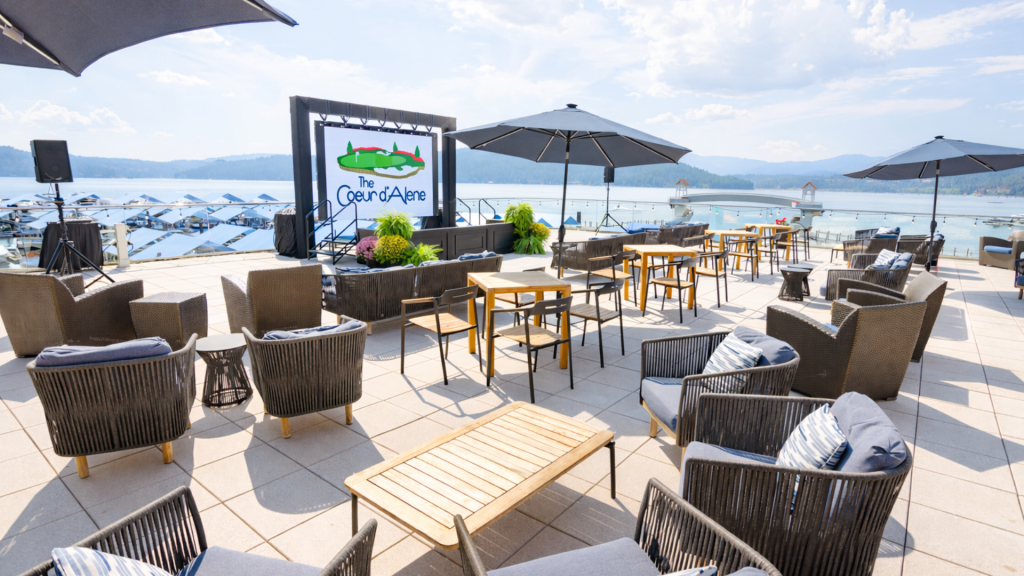
Plan with full confidence in venue flexibility. The resort offers over 32,000 square feet of meeting and event space across 25 rooms, accommodating groups from 10 to 1,800 (CDA Meetings). Options include the lakefront Hagadone Event Center with floor-to-ceiling glass walls, adjacent garden lawn, and indoor fireplaces that elevate awards and gala moments. A 3,360 square foot Lakeview Terrace and multiple boardrooms round out a wide venue mix.
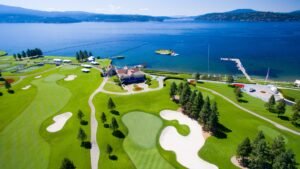
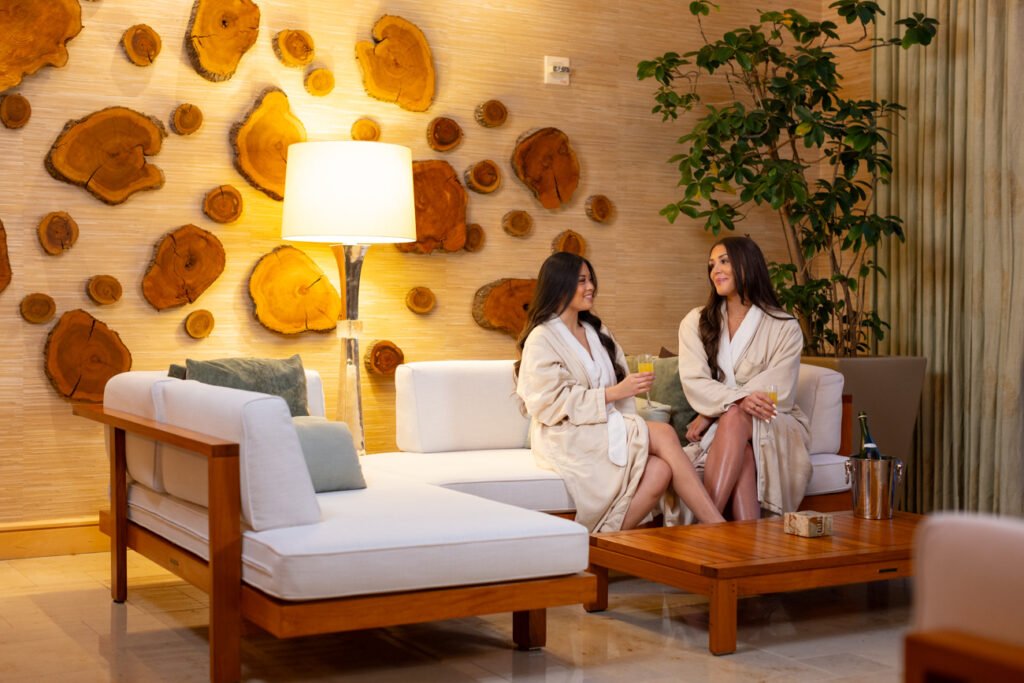
Design inclusive experiences across tracks. Play our world-renowned lakeview golf course featuring the iconic Floating Green island hole (Floating Green). Charter private lake cruises for networking and sunsets. Or center wellness with a full-service spa offering 21 private treatment rooms. Our team coordinates custom limo van transfers at $90 per person round trip, plus private boat movements for select experiences, ensuring the day flows seamlessly.
Most of all, you get a planning partner. We connect your goals to the right mix of recognition events, dining, activities, and downtime, then manage the details so your team can focus on relationships and celebration.
This framework shows how to balance recognition, choice, and downtime. Final schedules depend on season, group size, accessibility needs, weather, budget, and confirmed availability.
This framework shows how to balance recognition, choice, and downtime. Final schedules depend on season, group size, accessibility needs, weather, budget, and confirmed availability.
| Day | Program Objective | Experience | Planning Considerations | Optional Enhancements |
|---|---|---|---|---|
| Day 1 | Set the tone and welcome | Arrivals at GEG, 40-minute scenic drive; curbside bell service; evening waterfront reception | Simple routing via I-90; consider $90 per person round-trip limo van transfers; Lakeview Terrace or indoor backup | Welcome amenity in room; live acoustic duo; photo moment with lake backdrop |
| Day 2 | Recognize achievement and offer choice | Breakfast in Bayview Rooms; brief recognition or business update; activity tracks: Floating Green golf, spa appointments, or Hiawatha e-bike; free time; dine-around | Stagger tee times and spa blocks; confirm bike sizes and lighting for tunnels; provide dietary notes to venues | Private mahogany boat shuttle to golf; hosted wine pairing; guided post-dinner boardwalk stroll |
| Day 3 | Celebrate winners and strengthen relationships | Morning leisure or wellness; executive Q&A; lake cruise or lakeside group photo; evening gala at Hagadone Event Center | Floor-to-ceiling glass walls and indoor fireplaces; weather plan ready; AV for awards; seating strategy | Multi-course Northwest menu; custom lighting; fireworks on the lake where permitted |
Establish your baseline first, then track the lift and compare cost to benefit. Executives overwhelmingly support recognition when tied to business results, with 99% in favor (ConventionSouth).
Hard ROI methods: define the metric, capture pre-program baseline, measure post-program lift, and calculate cost versus incremental profit or savings (SDI Travel). Soft ROI, often called Return on Objective, includes survey scores, NPS, and participation rates (GoGather).
KPI checklist
To motivate, recognize, and reward top performance with a memorable experience that builds lasting emotional connection to the organization. Travel consistently outperforms cash for long-term motivation and loyalty (SITE Pulse, M&IT Magazine).
Aim for a 12-18 month horizon due to tight air capacity and high luxury demand (IRF 2026 Trends).
Air and ground transportation, accommodations, F&B, venues and production, activities, staffing, gratuities, taxes, service charges, contingency, and optional upgrades. Many planners reduce physical gifting to manage costs (IRF 2026 Trends).
Many planners are opting for slightly shorter durations to balance budget with impact (ConventionSouth).
A mix of iconic, social, and wellness options, such as our Floating Green golf experience (Floating Green), private lake cruises (Lake Cruises), and regional outdoor adventures like the Hiawatha Trail (Adventures of A+K).
Offer activity tracks. Let participants choose between adventure, moderate activity, social connection, or relaxation. Provide indoor or lower-impact alternates.
Airlift reliability, group capacity, room blocks, buyout options, seasonal activity availability, weather backups, dietary accommodations, and dedicated planning support.
Use 32,000+ sq ft of venues for recognition and learning, charter private lake cruises, plan a gala at the Hagadone Event Center, and build tracks spanning golf, spa, cruises, and local exploration (CDA Meetings, Floating Green, Lake Cruises).
Meetings and conferences center on work outputs and structured interaction (Wikipedia). Incentive travel centers on recognition and memory-making for those who achieved specific goals.
Bring your 2026 plan to life with a partner that aligns luxury lakeside moments to measurable business goals. Our team supports the full journey, from objective setting and venue selection to activity tracks, gala production, wellness, and coordinated logistics. With 32,000+ square feet of flexible space, lakeview golf with the Floating Green, private cruise options, and approachable Pacific Northwest hospitality, we help you create recognition that lasts (CDA Meetings, Floating Green).
Next step: Request an incentive travel consultation. Share dates, estimated attendance, objectives, preferred experiences, meeting needs, and accessibility considerations. We will tailor a proposal and planning checklist for your review. Start here: https://www.cdaresort.com/meetings/.
Group transfers can be arranged in our custom limo vans at $90 per person round trip. Spokane International Airport is about 40 minutes away, which keeps routing simple for U.S. travelers (Rome2Rio).
Incentive travel still leads for motivation and loyalty in 2026, but success depends on clarity and design. Define SMART objectives, include diverse roles across your organization, and build a balanced itinerary with signature recognition, meaningful choice, and time to recharge. Measure against a clear baseline so your executive team sees the impact.
The Coeur d’Alene Resort delivers an integrated lakeside ecosystem for this exact brief: flexible indoor and outdoor venues, iconic golf and cruises, wellness, varied dining settings, and reliable transfers. We partner closely with planners to align experiences to outcomes, then manage the details so every moment feels effortless.
Ready to plan your program by the lake? Request an incentive travel consultation with our team and share your dates, estimated attendance, objectives, and preferred experiences: https://www.cdaresort.com/meetings/.
It is a long established fact that a reader will be distracted by the readable content of a page when looking at its layout. The point of using Lorem Ipsum is that it has a more-or-less normal distribution of letters, as opposed to using ‘Content here, content here’, making it look like readable English. Many desktop publishing packages and web page editors now use Lorem Ipsum as their default model text, and a search for ‘lorem ipsum’ will uncover many web sites still in their infancy.
It is a long established fact that a reader will be distracted by the readable content of a page when looking at its layout. The point of using Lorem Ipsum is that it has a more-or-less normal distribution of letters, as opposed to using ‘Content here, content here’, making it look like readable English. Many desktop publishing packages and web page editors now use Lorem Ipsum as their default model text, and a search for ‘lorem ipsum’ will uncover many web sites still in their infancy.
The point of using Lorem Ipsum is that it has a more-or-less normal distribution of letters, as opposed to using ‘Content here, content here’, making

The point of using Lorem Ipsum is that it has a more-or-less normal distribution of letters, as opposed to using ‘Content here, content here’, making it look like readable English. Many desktop publishing packages and web page editors now use Lorem Ipsum as their default model text, and a search for ‘lorem ipsum’ will uncover many web sites still in their infancy.

It is a long established fact that a reader will be distracted by the readable content of a page when looking at its layout. The point of using Lorem Ipsum is that it has a more-or-less normal distribution
Copyright BlazeThemes. 2023