/ Sep 13, 2026
AI search for hotels is changing how travellers discover, compare and choose where to stay. Gone are the days when travellers simply typed “hotels near me” into Google and worked through a list of blue links.
Traditional SEO still does much of the heavy lifting, but it is no longer the whole job. More guests are now using ChatGPT, Gemini, Perplexity, Claude and Google’s AI Overviews to find hotel recommendations and answers.
Think of them a little like Iron Man’s robo-butler JARVIS – AI assistants helping travellers compare their options and decide where to stay.
What you may not know, however, is that each platform searches, interprets and cites information differently. If your hotel only optimises for Google, you could be missing visibility where future guests are already looking.
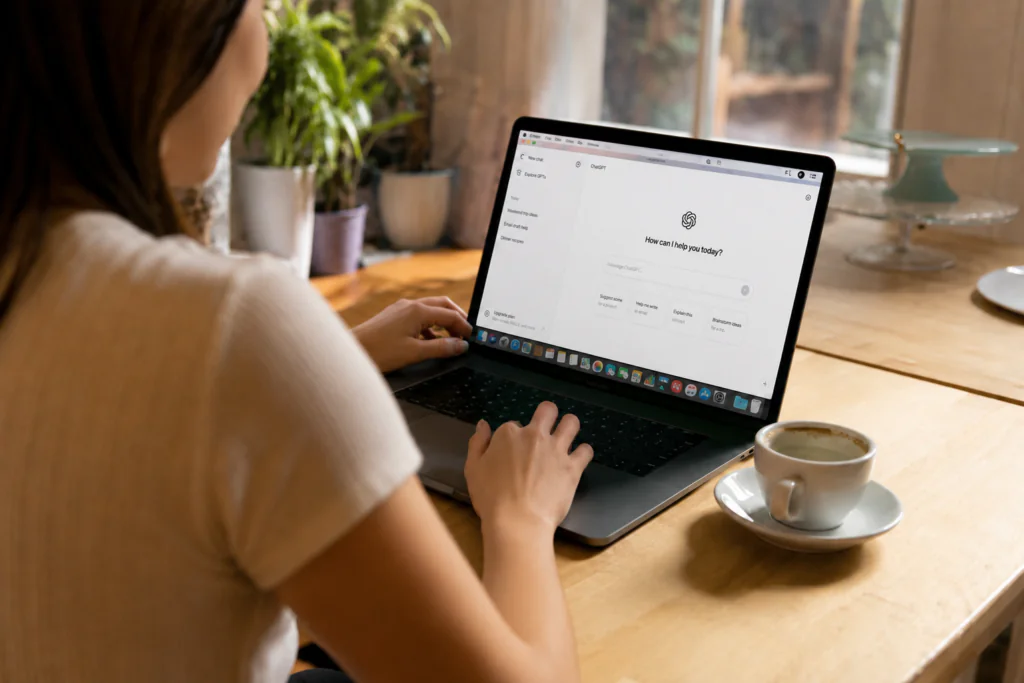
AI search is not one-size-fits-all.
Some platforms lean heavily on your website and Google’s ecosystem. Others use live web search, review sites, directories and trusted third-party sources.
What does this mean for your marketing? Realistically, your hotel needs to be VISIBLE, CONSISTENT AND EASY TO UNDERSTAND across more than one channel.
Guests now ask questions like:
They expect a direct recommendation, not just a list of blue links.
This is where GEO for hotels comes in. Generative engine optimisation for hotels helps AI systems understand what your property offers, who it suits and when it should be recommended.
You do not need four separate strategies. You need one strong foundation, followed by checks across each platform.
ChatGPT can draw on hotel websites, review platforms and trusted third-party sources when it browses.
For hotels, that means YOUR WEBSITE, TRIPADVISOR, OTHER REVIEW PROFILES AND TRUSTED DIRECTORIES should all tell the same story. Your key pages also need to be accessible to its search crawler, with clear and consistent information across each source.
Gemini and Google AI Overviews are closely tied to Google’s search ecosystem.
CRAWLABLE, USEFUL HOTEL PAGES, AN ACCURATE GOOGLE BUSINESS PROFILE AND CONSISTENT INFORMATION can help Google understand your hotel more clearly. Structured data can support this understanding, but it is not a shortcut into AI Overviews.
Perplexity acts more like an AI-powered search engine, scanning live web sources and citing them directly.
CLEAR, CURRENT HOTEL INFORMATION, TRUSTED EXTERNAL PROFILES AND WELL-STRUCTURED PAGES give Perplexity reliable sources to use when comparing and recommending hotels.
Claude can also search the live web and cite the sources it uses.
CONSISTENCY ACROSS YOUR WEBSITE, LISTINGS, REVIEWS AND MEDIA MENTIONS is the main aim of the game here. The more your hotel appears online as a cohesive brand, the easier it is for Claude to understand and accurately describe it to travellers – aka, your future guests.
Improving AI visibility for hotels starts with getting the basics right:
Fear not! UP Hotel Agency is here.
We’ve helped countless hotels prepare for AI-driven search with GEO services focused on structured content, brand consistency, review strategy and visibility across platforms like ChatGPT, Gemini, Perplexity and Claude.
Our digital marketing team is on hand to help make your hotel:
Hotels that adapt NOW will be in a much stronger position to earn VISIBILITY, TRUST AND MORE DIRECT BOOKING OPPORTUNITIES across multiple platforms.
Not entirely. Each platform uses different sources, but the foundations are similar.
A CRAWLABLE WEBSITE, CLEAR HOTEL INFORMATION, CONSISTENT LISTINGS, STRONG REVIEWS AND USEFUL CONTENT give every platform better information to work with.
Make important answers easy to find on relevant room, facility, location and FAQ pages.
Use clear headings, direct answers and consistent hotel information. Local guides and blogs should add useful detail, such as transport advice, events, itineraries and genuine local knowledge.
Content that is specific, useful and difficult to find elsewhere.
This may include local guides, event content, practical itineraries, accessibility information and advice for different guest types.
TIMING AND ORIGINALITY MATTER. Useful content published before a topic becomes saturated has a better chance of becoming a source.
A hotel GEO agency helps properties become easier for AI systems to find, understand, trust and recommend.
This may include technical crawl checks, answer-led content, schema implementation, local guides, blogs, review strategy, third-party authority and multi-platform testing. GEO FOR HOTELS should build on strong SEO rather than replace it, combining generative engine optimisation for hotels with practical hospitality knowledge.
AI search for hotels is changing how travellers discover, compare and choose where to stay. Gone are the days when travellers simply typed “hotels near me” into Google and worked through a list of blue links.
Traditional SEO still does much of the heavy lifting, but it is no longer the whole job. More guests are now using ChatGPT, Gemini, Perplexity, Claude and Google’s AI Overviews to find hotel recommendations and answers.
Think of them a little like Iron Man’s robo-butler JARVIS – AI assistants helping travellers compare their options and decide where to stay.
What you may not know, however, is that each platform searches, interprets and cites information differently. If your hotel only optimises for Google, you could be missing visibility where future guests are already looking.
AI search is not one-size-fits-all.
Some platforms lean heavily on your website and Google’s ecosystem. Others use live web search, review sites, directories and trusted third-party sources.
What does this mean for your marketing? Realistically, your hotel needs to be VISIBLE, CONSISTENT AND EASY TO UNDERSTAND across more than one channel.
Guests now ask questions like:
They expect a direct recommendation, not just a list of blue links.
This is where GEO for hotels comes in. Generative engine optimisation for hotels helps AI systems understand what your property offers, who it suits and when it should be recommended.
You do not need four separate strategies. You need one strong foundation, followed by checks across each platform.
ChatGPT can draw on hotel websites, review platforms and trusted third-party sources when it browses.
For hotels, that means YOUR WEBSITE, TRIPADVISOR, OTHER REVIEW PROFILES AND TRUSTED DIRECTORIES should all tell the same story. Your key pages also need to be accessible to its search crawler, with clear and consistent information across each source.
Gemini and Google AI Overviews are closely tied to Google’s search ecosystem.
CRAWLABLE, USEFUL HOTEL PAGES, AN ACCURATE GOOGLE BUSINESS PROFILE AND CONSISTENT INFORMATION can help Google understand your hotel more clearly. Structured data can support this understanding, but it is not a shortcut into AI Overviews.
Perplexity acts more like an AI-powered search engine, scanning live web sources and citing them directly.
CLEAR, CURRENT HOTEL INFORMATION, TRUSTED EXTERNAL PROFILES AND WELL-STRUCTURED PAGES give Perplexity reliable sources to use when comparing and recommending hotels.
Claude can also search the live web and cite the sources it uses.
CONSISTENCY ACROSS YOUR WEBSITE, LISTINGS, REVIEWS AND MEDIA MENTIONS is the main aim of the game here. The more your hotel appears online as a cohesive brand, the easier it is for Claude to understand and accurately describe it to travellers – aka, your future guests.
Improving AI visibility for hotels starts with getting the basics right:
Fear not! UP Hotel Agency is here.
We’ve helped countless hotels prepare for AI-driven search with GEO services focused on structured content, brand consistency, review strategy and visibility across platforms like ChatGPT, Gemini, Perplexity and Claude.
Our digital marketing team is on hand to help make your hotel:
Hotels that adapt NOW will be in a much stronger position to earn VISIBILITY, TRUST AND MORE DIRECT BOOKING OPPORTUNITIES across multiple platforms.
Not entirely. Each platform uses different sources, but the foundations are similar.
A CRAWLABLE WEBSITE, CLEAR HOTEL INFORMATION, CONSISTENT LISTINGS, STRONG REVIEWS AND USEFUL CONTENT give every platform better information to work with.
Make important answers easy to find on relevant room, facility, location and FAQ pages.
Use clear headings, direct answers and consistent hotel information. Local guides and blogs should add useful detail, such as transport advice, events, itineraries and genuine local knowledge.
Content that is specific, useful and difficult to find elsewhere.
This may include local guides, event content, practical itineraries, accessibility information and advice for different guest types.
TIMING AND ORIGINALITY MATTER. Useful content published before a topic becomes saturated has a better chance of becoming a source.
A hotel GEO agency helps properties become easier for AI systems to find, understand, trust and recommend.
This may include technical crawl checks, answer-led content, schema implementation, local guides, blogs, review strategy, third-party authority and multi-platform testing. GEO FOR HOTELS should build on strong SEO rather than replace it, combining generative engine optimisation for hotels with practical hospitality knowledge.