/ Sep 15, 2026
Trending
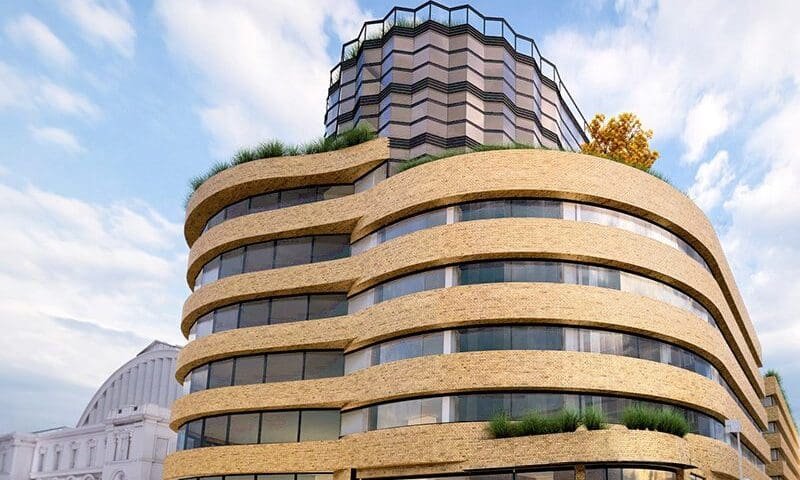
The debut of Hyatt Regency London Olympia Today (7 July) introduces 204 rooms to the capital’s competitive hotel market. While the opening strengthens Hyatt’s local presence, the project’s true importance lies in its role within a much larger strategic vision.
The hotel is a cornerstone of the £1.3bn Olympia regeneration, a wider development designed to transform the historic Kensington exhibition site into a mixed-use destination combining business, entertainment, culture, hospitality and leisure.
As Hyatt revealed in the week running up to the Olympia hotel’s opening, that wider ecosystem reflects a broader shift taking place across hospitality. As travellers increasingly seek experiences rather than simply accommodation, hotel operators are looking beyond the traditional model of providing rooms and focusing instead on how properties fit into larger destinations.
“This hotel becomes the fifth Hyatt Regency in London,” says Marc Jacheet, group president of Europe, Middle East and Africa (EMEA) at Hyatt. “What makes this project particularly exciting is that it isn’t simply another hotel opening. It’s part of the creation of an entirely new destination for London.”
The company’s ambition reflects a wider strategic question facing hospitality groups: how to create value in an increasingly competitive market where location, experience and loyalty are becoming as important as physical inventory.
Hyatt’s expansion plans in the UK come against the backdrop of an already established presence. The group operates 18 Hyatt-branded hotels in the UK, but Jacheet sees significant room for expansion.
“Across the EMEA region, the UK ranks among Hyatt’s three most important feeder markets, alongside Germany and Spain” – Marc Jacheet, group president of Europe, Middle East and Africa (EMEA) at Hyatt
The UK’s importance to Hyatt is not simply based on domestic demand. It is also one of the company’s most significant outbound travel markets, according to Jacheet, providing a large base of customers travelling internationally.
“Across the EMEA region, the UK ranks among Hyatt’s three most important feeder markets, alongside Germany and Spain,” says Jacheet, justifying why more hotels in relevant locations provide greater opportunities to attract customers into the Hyatt ecosystem – both domestically and internationally.
However, Jacheet emphasises that Hyatt’s approach is not based on maximising scale alone, adding, “Every project has to make strategic sense for the market in which it operates.”
That distinction is significant in a mature market such as the UK, where expansion opportunities are more constrained than in emerging destinations. Rather than simply increasing its footprint, Hyatt is focusing on where particular brands can meet specific demand profiles.
The company has already expanded beyond London, including its presence in regional cities such as Leeds, while continuing to assess further opportunities.
The approach reflects a broader trend among international hotel groups, which are increasingly prioritising disciplined development over rapid expansion. With ownership of hotels increasingly separated from operations, hospitality groups are able to grow through management agreements and partnerships rather than direct real estate investment.
While Hyatt Regency London Olympia is part of Hyatt’s broader UK strategy, the hotel’s positioning is closely tied to the ambitions of the wider Olympia regeneration. The site has historically been associated with exhibitions and events, but the redevelopment aims to broaden its role as a destination for visitors throughout the day and evening.
The transformation includes new entertainment venues, restaurants, bars and cultural spaces, including the recently opened Live at Olympia Music Hall operated by AEG, with a new theatre expected to open in partnership with Trafalgar Entertainment.
“We want to be a welcoming base for guests, whether they’re attending a conference, coming to see a concert, visiting the theatre or exploring London.” – Georges Moura, general manager at Hyatt Regency London Olympia
Hyatt’s management team says that the opportunity lies in becoming part of a destination where multiple reasons for visiting overlap.
“Our ambition is to become much more than simply a hotel beside an exhibition centre,” says Georges Moura, general manager of Hyatt Regency London Olympia. “We want to be a welcoming base for guests, whether they’re attending a conference, coming to see a concert, visiting the theatre or exploring London.”
The development reflects the changing nature of travel demand, particularly the increasing overlap between business and leisure. Traditional distinctions between corporate and leisure travel have become less clear as visitors extend business trips, combine events with personal experiences and choose destinations based on interests.
Jacheet describes this as “travel for passions”, adding, “People increasingly choose destinations because of a specific interest – whether that’s music, sport, food or culture – and then build an entire trip around that experience.”
For destinations such as Olympia, the opportunity is to capture more of that visitor journey. A conference delegate may attend an exhibition during the day, visit a restaurant in the evening and extend their stay to experience London more broadly.
However, creating this type of ecosystem requires coordination between multiple operators. The success of the destination depends not only on the quality of individual venues but on how effectively they work together.
Beyond Olympia, Hyatt’s strategy reflects a wider belief that brands will play an increasingly important role in the future of hospitality.
“Historically, hotel companies often owned and operated their properties. Today, the sector is largely asset-light, with hotels owned by institutional investors, family offices, sovereign wealth funds and other investment groups” – Marc Jacheet, group president of Europe, Middle East and Africa (EMEA) at Hyatt
Jacheet, who joined Hyatt from the luxury retail sector, argues the industry has undergone a fundamental transformation. Historically, hotel companies often owned and operated their properties. Today, the sector is largely asset-light, with hotels owned by institutional investors, family offices, sovereign wealth funds and other investment groups, while specialist operators manage the brands and guest experience.
That shift, as Jacheet sees it, has allowed companies such as Hyatt to focus investment on growing their networks, expanding their brands and strengthening customer relationships.
Hyatt has pursued this through acquisitions and portfolio development, including the acquisition of Apple Leisure Group, which strengthened its position in all-inclusive hospitality and Standard International, which expanded its lifestyle offering.
Since 2017, Hyatt has doubled its luxury room count, quintupled its lifestyle rooms and tripled its all-inclusive portfolio. The company’s argument is that future competition will increasingly centre on brand strength rather than physical ownership.
“Brands create value,” says Jacheet. “They signal quality, consistency and trust.”
That shift is particularly relevant as travellers increasingly seek reassurance and recognition when choosing where to stay. International hotel brands offer a level of familiarity, while loyalty programmes provide incentives for repeat engagement.
Yet branded hospitality remains far from dominant globally. Jacheet notes that less than a quarter of hotel rooms worldwide are affiliated with an international brand supported by a loyalty programme, suggesting there remains significant room for further growth in that space.
The World of Hyatt loyalty programme is central to the strategy. With 66 million members globally, the scheme accounts for approximately half of all room bookings.
Hyatt believes that other hotel groups should realise that loyalty has become a key competitive advantage. A new property does not simply create additional room supply; it also provides another opportunity to attract members, generate repeat bookings and encourage customers to travel across the wider network.
The acquisition of Mr and Mrs Smith in 2024 has expanded Hyatt’s offering further, bringing additional independent and boutique properties into the ecosystem. In the UK, Hyatt says members now have access to 18 Hyatt-branded hotels alongside around 130 Mr and Mrs Smith properties.
The strategic value is that loyalty allows individual hotels to benefit from a much broader network. A guest staying at Hyatt Regency London Olympia may not only be visiting London but also considering where to use points elsewhere in Hyatt’s global portfolio.
As international travel patterns become increasingly complex, hotel groups are seeking to build ecosystems that encourage customers to remain within their brands across multiple destinations and trip types.
While Hyatt’s growth strategy covers multiple segments, Jacheet emphasises that expansion remains focused on areas where the company believes it has a clear opportunity.
One area of continued investment is all-inclusive hospitality, where Hyatt has become one of the largest operators globally following the Apple Leisure Group acquisition. However, Jacheet says: “All-inclusive is becoming less about price positioning and more about peace of mind and experience quality.”
The shift reflects broader changes in consumer behaviour, with travellers increasingly valuing convenience, certainty and curated experiences.
Hyatt is also exploring growth in branded residences, a sector that has expanded significantly across luxury hospitality. The model combines private ownership with hotel-style services and can form part of the wider financing structure of mixed-use developments.
However, Hyatt remains cautious about expansion in this area. “We are not pursuing branded residences as a standalone strategy everywhere,” says Jacheet.
Instead, the company sees residences as most relevant when they complement a wider hospitality project.
The same principle applies to the wider luxury market. Hyatt has expanded its luxury portfolio through brands such as Park Hyatt and Alila, but Jacheet says the company will not move into adjacent luxury categories.
Some competitors have pursued broader luxury ecosystems spanning areas such as retail, aviation and private experiences. In contrast, Hyatt describes its approach as more focused.
“Our core focus remains hospitality,” Jacheet maintains. “We believe we create the most value when we stay focused and execute exceptionally well within our domain.”
Ultimately, Hyatt Regency London Olympia represents a test of whether a hotel can become more than a place to stay. The project reflects many of the trends shaping hospitality: destination-led development, experience-driven travel, loyalty ecosystems and the growing importance of brands.
But the success of that model depends on execution. A destination is not created through individual components alone; it relies on how effectively those elements combine into a coherent experience.
For Hyatt, the hotel’s role is to provide the hospitality layer that connects the wider Olympia ecosystem. “This is about bringing together business, leisure, entertainment and culture in a way that reflects how people actually travel today,” Jacheet concludes.
The debut of Hyatt Regency London Olympia Today (7 July) introduces 204 rooms to the capital’s competitive hotel market. While the opening strengthens Hyatt’s local presence, the project’s true importance lies in its role within a much larger strategic vision.
The hotel is a cornerstone of the £1.3bn Olympia regeneration, a wider development designed to transform the historic Kensington exhibition site into a mixed-use destination combining business, entertainment, culture, hospitality and leisure.
As Hyatt revealed in the week running up to the Olympia hotel’s opening, that wider ecosystem reflects a broader shift taking place across hospitality. As travellers increasingly seek experiences rather than simply accommodation, hotel operators are looking beyond the traditional model of providing rooms and focusing instead on how properties fit into larger destinations.
“This hotel becomes the fifth Hyatt Regency in London,” says Marc Jacheet, group president of Europe, Middle East and Africa (EMEA) at Hyatt. “What makes this project particularly exciting is that it isn’t simply another hotel opening. It’s part of the creation of an entirely new destination for London.”
The company’s ambition reflects a wider strategic question facing hospitality groups: how to create value in an increasingly competitive market where location, experience and loyalty are becoming as important as physical inventory.
Hyatt’s expansion plans in the UK come against the backdrop of an already established presence. The group operates 18 Hyatt-branded hotels in the UK, but Jacheet sees significant room for expansion.
“Across the EMEA region, the UK ranks among Hyatt’s three most important feeder markets, alongside Germany and Spain” – Marc Jacheet, group president of Europe, Middle East and Africa (EMEA) at Hyatt
The UK’s importance to Hyatt is not simply based on domestic demand. It is also one of the company’s most significant outbound travel markets, according to Jacheet, providing a large base of customers travelling internationally.
“Across the EMEA region, the UK ranks among Hyatt’s three most important feeder markets, alongside Germany and Spain,” says Jacheet, justifying why more hotels in relevant locations provide greater opportunities to attract customers into the Hyatt ecosystem – both domestically and internationally.
However, Jacheet emphasises that Hyatt’s approach is not based on maximising scale alone, adding, “Every project has to make strategic sense for the market in which it operates.”
That distinction is significant in a mature market such as the UK, where expansion opportunities are more constrained than in emerging destinations. Rather than simply increasing its footprint, Hyatt is focusing on where particular brands can meet specific demand profiles.
The company has already expanded beyond London, including its presence in regional cities such as Leeds, while continuing to assess further opportunities.
The approach reflects a broader trend among international hotel groups, which are increasingly prioritising disciplined development over rapid expansion. With ownership of hotels increasingly separated from operations, hospitality groups are able to grow through management agreements and partnerships rather than direct real estate investment.
While Hyatt Regency London Olympia is part of Hyatt’s broader UK strategy, the hotel’s positioning is closely tied to the ambitions of the wider Olympia regeneration. The site has historically been associated with exhibitions and events, but the redevelopment aims to broaden its role as a destination for visitors throughout the day and evening.
The transformation includes new entertainment venues, restaurants, bars and cultural spaces, including the recently opened Live at Olympia Music Hall operated by AEG, with a new theatre expected to open in partnership with Trafalgar Entertainment.
“We want to be a welcoming base for guests, whether they’re attending a conference, coming to see a concert, visiting the theatre or exploring London.” – Georges Moura, general manager at Hyatt Regency London Olympia
Hyatt’s management team says that the opportunity lies in becoming part of a destination where multiple reasons for visiting overlap.
“Our ambition is to become much more than simply a hotel beside an exhibition centre,” says Georges Moura, general manager of Hyatt Regency London Olympia. “We want to be a welcoming base for guests, whether they’re attending a conference, coming to see a concert, visiting the theatre or exploring London.”
The development reflects the changing nature of travel demand, particularly the increasing overlap between business and leisure. Traditional distinctions between corporate and leisure travel have become less clear as visitors extend business trips, combine events with personal experiences and choose destinations based on interests.
Jacheet describes this as “travel for passions”, adding, “People increasingly choose destinations because of a specific interest – whether that’s music, sport, food or culture – and then build an entire trip around that experience.”
For destinations such as Olympia, the opportunity is to capture more of that visitor journey. A conference delegate may attend an exhibition during the day, visit a restaurant in the evening and extend their stay to experience London more broadly.
However, creating this type of ecosystem requires coordination between multiple operators. The success of the destination depends not only on the quality of individual venues but on how effectively they work together.
Beyond Olympia, Hyatt’s strategy reflects a wider belief that brands will play an increasingly important role in the future of hospitality.
“Historically, hotel companies often owned and operated their properties. Today, the sector is largely asset-light, with hotels owned by institutional investors, family offices, sovereign wealth funds and other investment groups” – Marc Jacheet, group president of Europe, Middle East and Africa (EMEA) at Hyatt
Jacheet, who joined Hyatt from the luxury retail sector, argues the industry has undergone a fundamental transformation. Historically, hotel companies often owned and operated their properties. Today, the sector is largely asset-light, with hotels owned by institutional investors, family offices, sovereign wealth funds and other investment groups, while specialist operators manage the brands and guest experience.
That shift, as Jacheet sees it, has allowed companies such as Hyatt to focus investment on growing their networks, expanding their brands and strengthening customer relationships.
Hyatt has pursued this through acquisitions and portfolio development, including the acquisition of Apple Leisure Group, which strengthened its position in all-inclusive hospitality and Standard International, which expanded its lifestyle offering.
Since 2017, Hyatt has doubled its luxury room count, quintupled its lifestyle rooms and tripled its all-inclusive portfolio. The company’s argument is that future competition will increasingly centre on brand strength rather than physical ownership.
“Brands create value,” says Jacheet. “They signal quality, consistency and trust.”
That shift is particularly relevant as travellers increasingly seek reassurance and recognition when choosing where to stay. International hotel brands offer a level of familiarity, while loyalty programmes provide incentives for repeat engagement.
Yet branded hospitality remains far from dominant globally. Jacheet notes that less than a quarter of hotel rooms worldwide are affiliated with an international brand supported by a loyalty programme, suggesting there remains significant room for further growth in that space.
The World of Hyatt loyalty programme is central to the strategy. With 66 million members globally, the scheme accounts for approximately half of all room bookings.
Hyatt believes that other hotel groups should realise that loyalty has become a key competitive advantage. A new property does not simply create additional room supply; it also provides another opportunity to attract members, generate repeat bookings and encourage customers to travel across the wider network.
The acquisition of Mr and Mrs Smith in 2024 has expanded Hyatt’s offering further, bringing additional independent and boutique properties into the ecosystem. In the UK, Hyatt says members now have access to 18 Hyatt-branded hotels alongside around 130 Mr and Mrs Smith properties.
The strategic value is that loyalty allows individual hotels to benefit from a much broader network. A guest staying at Hyatt Regency London Olympia may not only be visiting London but also considering where to use points elsewhere in Hyatt’s global portfolio.
As international travel patterns become increasingly complex, hotel groups are seeking to build ecosystems that encourage customers to remain within their brands across multiple destinations and trip types.
While Hyatt’s growth strategy covers multiple segments, Jacheet emphasises that expansion remains focused on areas where the company believes it has a clear opportunity.
One area of continued investment is all-inclusive hospitality, where Hyatt has become one of the largest operators globally following the Apple Leisure Group acquisition. However, Jacheet says: “All-inclusive is becoming less about price positioning and more about peace of mind and experience quality.”
The shift reflects broader changes in consumer behaviour, with travellers increasingly valuing convenience, certainty and curated experiences.
Hyatt is also exploring growth in branded residences, a sector that has expanded significantly across luxury hospitality. The model combines private ownership with hotel-style services and can form part of the wider financing structure of mixed-use developments.
However, Hyatt remains cautious about expansion in this area. “We are not pursuing branded residences as a standalone strategy everywhere,” says Jacheet.
Instead, the company sees residences as most relevant when they complement a wider hospitality project.
The same principle applies to the wider luxury market. Hyatt has expanded its luxury portfolio through brands such as Park Hyatt and Alila, but Jacheet says the company will not move into adjacent luxury categories.
Some competitors have pursued broader luxury ecosystems spanning areas such as retail, aviation and private experiences. In contrast, Hyatt describes its approach as more focused.
“Our core focus remains hospitality,” Jacheet maintains. “We believe we create the most value when we stay focused and execute exceptionally well within our domain.”
Ultimately, Hyatt Regency London Olympia represents a test of whether a hotel can become more than a place to stay. The project reflects many of the trends shaping hospitality: destination-led development, experience-driven travel, loyalty ecosystems and the growing importance of brands.
But the success of that model depends on execution. A destination is not created through individual components alone; it relies on how effectively those elements combine into a coherent experience.
For Hyatt, the hotel’s role is to provide the hospitality layer that connects the wider Olympia ecosystem. “This is about bringing together business, leisure, entertainment and culture in a way that reflects how people actually travel today,” Jacheet concludes.
It is a long established fact that a reader will be distracted by the readable content of a page when looking at its layout. The point of using Lorem Ipsum is that it has a more-or-less normal distribution of letters, as opposed to using ‘Content here, content here’, making it look like readable English. Many desktop publishing packages and web page editors now use Lorem Ipsum as their default model text, and a search for ‘lorem ipsum’ will uncover many web sites still in their infancy.
It is a long established fact that a reader will be distracted by the readable content of a page when looking at its layout. The point of using Lorem Ipsum is that it has a more-or-less normal distribution of letters, as opposed to using ‘Content here, content here’, making it look like readable English. Many desktop publishing packages and web page editors now use Lorem Ipsum as their default model text, and a search for ‘lorem ipsum’ will uncover many web sites still in their infancy.
The point of using Lorem Ipsum is that it has a more-or-less normal distribution of letters, as opposed to using ‘Content here, content here’, making

The point of using Lorem Ipsum is that it has a more-or-less normal distribution of letters, as opposed to using ‘Content here, content here’, making it look like readable English. Many desktop publishing packages and web page editors now use Lorem Ipsum as their default model text, and a search for ‘lorem ipsum’ will uncover many web sites still in their infancy.

It is a long established fact that a reader will be distracted by the readable content of a page when looking at its layout. The point of using Lorem Ipsum is that it has a more-or-less normal distribution
Copyright BlazeThemes. 2023