/ Sep 22, 2026
Trending
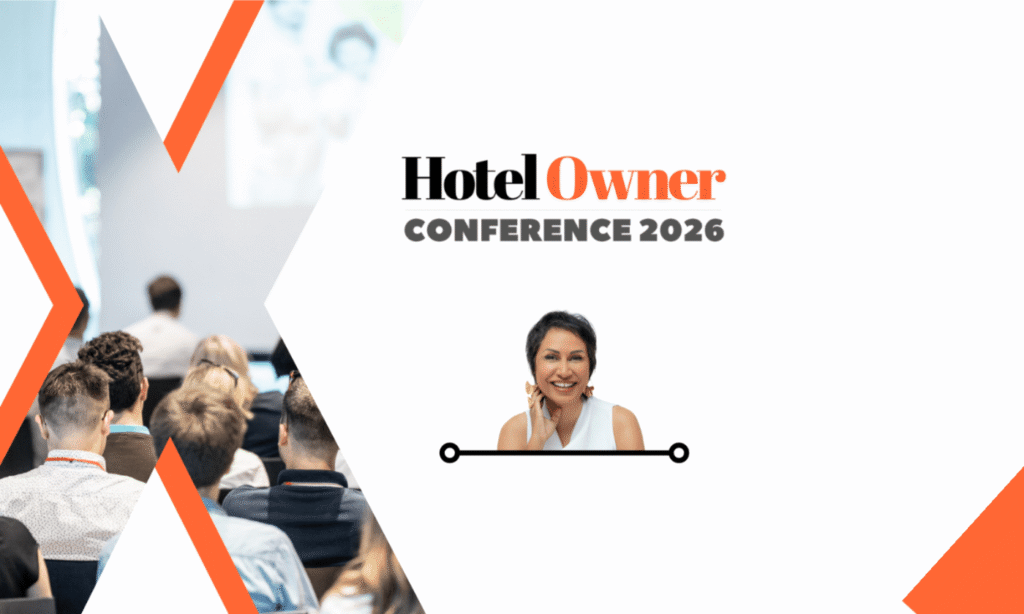
We are now just over three months out from the Hotel Owner Conference 2026 this November in London. As the hospitality landscape faces a unique mix of rising operational pressures and massive technological shifts, this year’s forum is all about actionable strategies, resilience, and forward-thinking leadership.
To give you a sneak peek into the high-calibre insights coming to the stage, we’re launching a series of quick-fire ‘get to know’ chats with our expert speakers.
Next up is Shonali Devereaux. A champion for the business meetings and events sector, Shonali brings a wealth of experience spanning high-profile global events and vital industry advocacy. We sat down with her to discuss unforgettable career highlights, her work strengthening the sector’s voice in 2026, navigating the balance between generational service shifts and rising operational costs, and why fully integrating events into hotel strategy is key to driving real yield.
What has been the most memorable moment of your career so far?
It’s hard to single out just one, but a few moments stand out. Watching the closing ceremony of the Sydney 2000 Olympics from the front row was very special, knowing I had played a part in delivering something truly special. I was Accreditation Manager at the shooting venue, and seeing the scale of the event come together successfully was an incredibly proud moment.
On a very different note, the smoking ban coming into force is also a milestone I’ll always remember. It followed health policy discussions that I helped facilitate through The Health Hotel at all three main political party conferences, and it’s rare you get to see real political action come out of conversations like that.
What has been your main focus in your career during 2026 so far?
This year has been all about collaborating, working with other associations to raise the profile of the business meetings and events sector in the UK. This has become especially important given the challenges facing VisitBritain. Business meetings and events can often be an afterthought within the breadth of hospitality, so our sector needs a strong, unified voice advocating for it, particularly with government departments. A lot of our associations work in 2026 has focused on building that.
What’s the best piece of advice you’ve ever received throughout your career?
Always follow your passions. This industry can often require long hours and can be high pressure. It’s more often a marathon rather than a sprint, and without a genuine passion or a clear north star to aim for, that marathon becomes very hard to run. It’s easy to burn out chasing goals that were never really yours.
What do you see as the three biggest challenges facing the hotel industry right now?
Staffing, changing consumer expectations and rising operational costs are all challenges that resonate within the business meetings and events sector, and equally resonate with hotels.
Staffing remains one of the most significant challenges, with the industry facing ongoing recruitment and retention issues alongside increased employment costs, National Insurance rises and minimum wage pressures. This creates a difficult balance between maintaining a skilled, engaged workforce and managing the rising cost base required to deliver quality service.
Consumer expectations have also changed significantly post-COVID. Guests are more informed, more demanding and expect a high level of service, cleanliness and amenities for the price they pay. Every stay is now an experience that can be instantly shared online, influencing expectations and perceptions.
Finally, rising food and supply costs continue to put pressure on margins, making it increasingly challenging to deliver value while protecting quality and affordability.
Looking into 2027 and beyond, what trends in hospitality are you most excited to see develop?
What I find fascinating is how much customer service is changing. Formalities such as silver service was normal and expected in the 1980s, whereas today’s guests often prefer to be treated like a known individual rather than served formally. That’s a real generational shift in expectations, yet hotels and events are having to serve several generations of guest at once so pleasing all the people has become even more challenging.
Academically, service quality has always been broken down into different levels, but at its heart it comes down to the human-to-human interaction – how we make sure everyone feels seen and heard whatever their expectations happen to be. There’s no longer one cultural norm for what good customer service, or hospitality itself, actually means. Working out how the industry responds to that, serving different generations and cultures well, all at the same time, is the trend I’m most excited to watch develop over the next few years.
What’s one key takeaway you hope attendees will leave this year’s conference with?
If there’s one thing I want attendees to leave with, it’s a clear sense of how to properly integrate meetings and events into their day-to-day operations. Not treat it as a bolt-on or a nice-to-have, but as a core part of how a hotel drives yield across every square foot, every day of the week.
We are now just over three months out from the Hotel Owner Conference 2026 this November in London. As the hospitality landscape faces a unique mix of rising operational pressures and massive technological shifts, this year’s forum is all about actionable strategies, resilience, and forward-thinking leadership.
To give you a sneak peek into the high-calibre insights coming to the stage, we’re launching a series of quick-fire ‘get to know’ chats with our expert speakers.
Next up is Shonali Devereaux. A champion for the business meetings and events sector, Shonali brings a wealth of experience spanning high-profile global events and vital industry advocacy. We sat down with her to discuss unforgettable career highlights, her work strengthening the sector’s voice in 2026, navigating the balance between generational service shifts and rising operational costs, and why fully integrating events into hotel strategy is key to driving real yield.
What has been the most memorable moment of your career so far?
It’s hard to single out just one, but a few moments stand out. Watching the closing ceremony of the Sydney 2000 Olympics from the front row was very special, knowing I had played a part in delivering something truly special. I was Accreditation Manager at the shooting venue, and seeing the scale of the event come together successfully was an incredibly proud moment.
On a very different note, the smoking ban coming into force is also a milestone I’ll always remember. It followed health policy discussions that I helped facilitate through The Health Hotel at all three main political party conferences, and it’s rare you get to see real political action come out of conversations like that.
What has been your main focus in your career during 2026 so far?
This year has been all about collaborating, working with other associations to raise the profile of the business meetings and events sector in the UK. This has become especially important given the challenges facing VisitBritain. Business meetings and events can often be an afterthought within the breadth of hospitality, so our sector needs a strong, unified voice advocating for it, particularly with government departments. A lot of our associations work in 2026 has focused on building that.
What’s the best piece of advice you’ve ever received throughout your career?
Always follow your passions. This industry can often require long hours and can be high pressure. It’s more often a marathon rather than a sprint, and without a genuine passion or a clear north star to aim for, that marathon becomes very hard to run. It’s easy to burn out chasing goals that were never really yours.
What do you see as the three biggest challenges facing the hotel industry right now?
Staffing, changing consumer expectations and rising operational costs are all challenges that resonate within the business meetings and events sector, and equally resonate with hotels.
Staffing remains one of the most significant challenges, with the industry facing ongoing recruitment and retention issues alongside increased employment costs, National Insurance rises and minimum wage pressures. This creates a difficult balance between maintaining a skilled, engaged workforce and managing the rising cost base required to deliver quality service.
Consumer expectations have also changed significantly post-COVID. Guests are more informed, more demanding and expect a high level of service, cleanliness and amenities for the price they pay. Every stay is now an experience that can be instantly shared online, influencing expectations and perceptions.
Finally, rising food and supply costs continue to put pressure on margins, making it increasingly challenging to deliver value while protecting quality and affordability.
Looking into 2027 and beyond, what trends in hospitality are you most excited to see develop?
What I find fascinating is how much customer service is changing. Formalities such as silver service was normal and expected in the 1980s, whereas today’s guests often prefer to be treated like a known individual rather than served formally. That’s a real generational shift in expectations, yet hotels and events are having to serve several generations of guest at once so pleasing all the people has become even more challenging.
Academically, service quality has always been broken down into different levels, but at its heart it comes down to the human-to-human interaction – how we make sure everyone feels seen and heard whatever their expectations happen to be. There’s no longer one cultural norm for what good customer service, or hospitality itself, actually means. Working out how the industry responds to that, serving different generations and cultures well, all at the same time, is the trend I’m most excited to watch develop over the next few years.
What’s one key takeaway you hope attendees will leave this year’s conference with?
If there’s one thing I want attendees to leave with, it’s a clear sense of how to properly integrate meetings and events into their day-to-day operations. Not treat it as a bolt-on or a nice-to-have, but as a core part of how a hotel drives yield across every square foot, every day of the week.
It is a long established fact that a reader will be distracted by the readable content of a page when looking at its layout. The point of using Lorem Ipsum is that it has a more-or-less normal distribution of letters, as opposed to using ‘Content here, content here’, making it look like readable English. Many desktop publishing packages and web page editors now use Lorem Ipsum as their default model text, and a search for ‘lorem ipsum’ will uncover many web sites still in their infancy.
It is a long established fact that a reader will be distracted by the readable content of a page when looking at its layout. The point of using Lorem Ipsum is that it has a more-or-less normal distribution of letters, as opposed to using ‘Content here, content here’, making it look like readable English. Many desktop publishing packages and web page editors now use Lorem Ipsum as their default model text, and a search for ‘lorem ipsum’ will uncover many web sites still in their infancy.
The point of using Lorem Ipsum is that it has a more-or-less normal distribution of letters, as opposed to using ‘Content here, content here’, making

The point of using Lorem Ipsum is that it has a more-or-less normal distribution of letters, as opposed to using ‘Content here, content here’, making it look like readable English. Many desktop publishing packages and web page editors now use Lorem Ipsum as their default model text, and a search for ‘lorem ipsum’ will uncover many web sites still in their infancy.

It is a long established fact that a reader will be distracted by the readable content of a page when looking at its layout. The point of using Lorem Ipsum is that it has a more-or-less normal distribution
Copyright BlazeThemes. 2023