/ Sep 13, 2026
For years, hospitality has faced a familiar challenge: attracting enough people into a sector that is often misunderstood. While hotels, restaurants and bars continue to offer varied career pathways, many young people still view hospitality as temporary work rather than a place to build a long-term career.
At a time when the number of young people not in education, employment or training (NEETs) has become a growing concern, some operators believe hospitality could play a greater role in providing meaningful entry points into the world of work. However, doing so requires more than simply filling vacancies. It requires changing perceptions and creating clearer development pathways that offer progression, stability and professional growth.
To support young workers and career-switchers, hotels are investing in structured training, education partnerships and leadership initiatives to strengthen the talent pipeline. The question is whether these efforts can reposition hospitality as a primary career choice rather than a stopgap.
Raissa de Haas, co-founder of Double Dutch Drinks, believes young people often overlook the variety of careers in the sector. Her scholarship programme for female bartenders has already placed talent at The Ned and The Orange Boutique Hotel.
“Hospitality doesn’t have a talent shortage; it is very much an awareness shortage. Many young people simply don’t realise the breadth of opportunities available.” – Raissa de Haas, co-founder at Double Dutch Drinks
“Unfortunately, yes,” she says, when asked whether the industry still suffers from perceptions of being a temporary or low-skilled career. The issue, de Haas argues, extends beyond traditional roles. While hospitality is often associated with frontline service positions, the sector also includes careers in leadership, operations, marketing, commercial strategy, entrepreneurship and product development.
“Hospitality doesn’t have a talent shortage; it is very much an awareness shortage,” de Haas explains. “Many young people simply don’t realise the breadth of opportunities available.”
For operators, this creates a dual challenge. They must attract new entrants while also communicating what a long-term career in hospitality can look like. Without that visibility, young people may never consider the sector when making decisions about their future.
Richard Adams, HR director of Cairn Hotel Group, agrees that misconceptions remain a barrier. “I think people are often unaware of how much career growth can be achieved in hospitality, whether that’s climbing the career ladder or personal growth.”
A common assumption, he adds, is that hospitality is simply a temporary option. However, he finds that many people who enter the sector discover opportunities they did not initially expect. “In reality, we know that many people come into the sector, love it and stay because it gets under their skin.”
The industry has also had to address older perceptions around working conditions, including concerns about inconsistent hours or limited progression. “The world is a very different place now in terms of hospitality,” Adams points out. “It can be hard work, but it’s also very rewarding. There is variety, there is fun and there are opportunities to progress.”
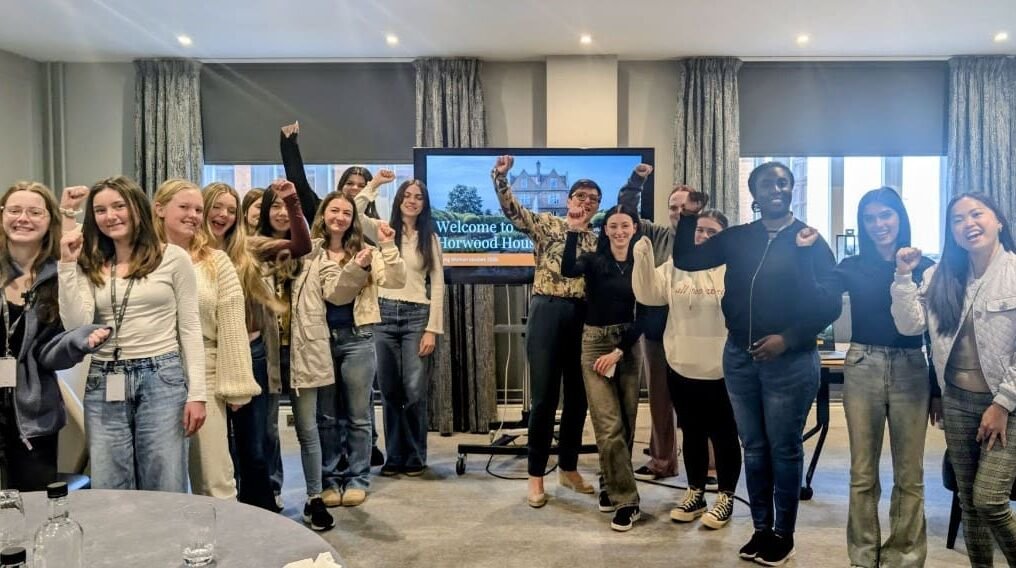
Changing perceptions is not only about communication. Many businesses are now looking at how they can actively create pathways into hospitality earlier, working with education providers to introduce young people to the industry. Horwood House, for example, has launched its Young Women Leaders in Hospitality course in partnership with Buckinghamshire New University and Milton Keynes College Group.
The programme aims to support young women entering hospitality by providing industry insight, leadership training, communication skills and networking opportunities. More than 20 women attended the first session, including Horwood House employees, local college students and hospitality workers from the region.
“We want women across Milton Keynes and Buckinghamshire to see the breadth of opportunity within hospitality, to feel confident in professional environments and to understand that this industry can offer long-term, rewarding careers.” – Tracy Montgomery, creative consultant at Horwood House
Tracy Montgomery, creative consultant of Horwood House, says the programme is rooted in personal experience and the importance of visible role models.
“When I started my career, I was very fortunate to be supported by strong female managers and leaders who helped me build confidence, develop my skills and to communicate clearly,” she explains. “Young Women Leaders in Hospitality is our way of giving that support back. We want women across Milton Keynes and Buckinghamshire to see the breadth of opportunity within hospitality, to feel confident in professional environments and to understand that this industry can offer long-term, rewarding careers.”
The programme also reflects a broader trend in how hospitality businesses are approaching recruitment. Rather than relying solely on candidates already familiar with the sector, operators are increasingly looking to build relationships with potential employees before they enter the workforce.
For Horwood House, partnerships with education providers are intended to bridge the gap between learning and employment, helping young people better understand the opportunities available.
While formal training is becoming increasingly important, employers are also placing greater emphasis on the personal qualities that allow people to succeed in hospitality. De Haas believes technical skills remain valuable, but they are not the only factor that determines whether someone will thrive.
“Formal qualifications and leadership programmes carry more weight today because they demonstrate commitment, professionalism and ambition,” she says. “However, hospitality remains an industry where experience is incredibly valuable. The strongest candidates often combine practical experience with structured learning.”
For younger applicants, one of the biggest challenges is often developing a longer-term mindset around progression. From the other side of the fence, de Haas adds that employers are increasingly looking for qualities that cannot easily be taught.
“I think the most valuable candidates are those who are curious about how businesses operate, eager to take ownership and motivated to develop their careers over time,” de Haas elaborates. “Technical skills can be taught, but ambition, resilience and a willingness to grow are increasingly what employers are looking for.”
Soft skills will remain particularly important in hospitality, de Haas stresses, as customer experience depends heavily on human interaction.
“Communication, teamwork, emotional intelligence and customer engagement are often more important than technical knowledge when someone is starting their career,” de Haas says. “Technical skills can be developed through training, but great hospitality is ultimately about connecting with people.”
Meanwhile, Adams highlights a similar focus at Cairn Hotel Group, where the organisation looks for people who can embody its values.
“Hospitality is all about people and experiences, so we need people who can help bring those experiences to life,” he says. “For us, it’s about finding people who can bring our values – respect, integrity, sustainability and excellence – into their day-to-day work.”
The increasing focus on training could bring legitimacy, but there’s another consequence to consider: will hospitality reach a point where formal qualifications will become a requirement?
“I’m a big advocate for apprenticeships and longer-term formal learning, but it isn’t the only route,” says Adams, who shares that Cairn Hotels has used apprenticeships as part of its wider development approach. This route provides participants with structured learning, formal qualifications and additional support that will see them through a rewarding career either at Cairn or the wider hospitality industry.
However, Adams believes businesses must recognise that people develop in different ways.
“We have some incredible people who do a wonderful job for their colleagues and guests, and some will have formal qualifications while others won’t,” he elaborates. “Ultimately, it’s about the impact someone makes, what they bring to the team and how they contribute. Qualifications can be hugely valuable, but they don’t define someone’s ability to succeed.”
This suggests that the future of hospitality development may not be about replacing workplace learning with formal education, but combining both.
“I think specific programmes for young people within our sector are something we’d like to see more of, alongside support and funding.” – Richard Adams, HR director at Cairn Hotel Group
With increasing attention on young people who are not currently in education, employment or training, hospitality is also being considered as a potential route into employment and skills development.
Adams believes the sector has a role to play beyond recruitment, saying, “I think specific programmes for young people within our sector are something we’d like to see more of, alongside support and funding.”
However, he believes hospitality itself can provide valuable skills regardless of someone’s starting point. Adams cites the breadth of opportunity to sharpen one’s confidence, emotional intelligence, teamwork and problem-solving skills. Those experiences, he argues, can provide a strong foundation for future employment – both within hospitality and beyond.
Ultimately, the success of these initiatives will depend not simply on how many people enter hospitality, but on how many choose to stay and progress.
Cairn Hotel Group’s Hospitality Talent Associate programme aims to do exactly that by combining practical experience, mentoring and formal learning. The programme gives participants exposure to different departments across the business, helping them understand how each role contributes to the wider guest experience.
“We want to give people exposure to different departments within the hotel, help them learn from colleagues who have been in the industry for a long time and also provide external training and experiences through partners across the sector,” Adams explains.
He adds that Cairn’s long-term ambition is to create future supervisors, managers and leaders who understand the industry from the ground up. “After 6–12 months, we want participants to have experienced different departments and understand how the hotel operates, how each role contributes to the wider business and how everything connects to the guest journey.”
Looking further ahead, success would mean seeing participants continue to develop within the sector, saying, “We want them to still be here, enjoying hospitality, making a measurable impact on our guests and our teams and experiencing the success and recognition that comes with that.”
Hospitality’s talent challenge is therefore becoming less about simply attracting people into jobs, and more about demonstrating why those jobs can become careers. As businesses invest in training, mentoring and clearer progression routes, the sector is attempting to reshape its identity for the next generation: not as a temporary stop, but as a foundation for professional growth.
For years, hospitality has faced a familiar challenge: attracting enough people into a sector that is often misunderstood. While hotels, restaurants and bars continue to offer varied career pathways, many young people still view hospitality as temporary work rather than a place to build a long-term career.
At a time when the number of young people not in education, employment or training (NEETs) has become a growing concern, some operators believe hospitality could play a greater role in providing meaningful entry points into the world of work. However, doing so requires more than simply filling vacancies. It requires changing perceptions and creating clearer development pathways that offer progression, stability and professional growth.
To support young workers and career-switchers, hotels are investing in structured training, education partnerships and leadership initiatives to strengthen the talent pipeline. The question is whether these efforts can reposition hospitality as a primary career choice rather than a stopgap.
Raissa de Haas, co-founder of Double Dutch Drinks, believes young people often overlook the variety of careers in the sector. Her scholarship programme for female bartenders has already placed talent at The Ned and The Orange Boutique Hotel.
“Hospitality doesn’t have a talent shortage; it is very much an awareness shortage. Many young people simply don’t realise the breadth of opportunities available.” – Raissa de Haas, co-founder at Double Dutch Drinks
“Unfortunately, yes,” she says, when asked whether the industry still suffers from perceptions of being a temporary or low-skilled career. The issue, de Haas argues, extends beyond traditional roles. While hospitality is often associated with frontline service positions, the sector also includes careers in leadership, operations, marketing, commercial strategy, entrepreneurship and product development.
“Hospitality doesn’t have a talent shortage; it is very much an awareness shortage,” de Haas explains. “Many young people simply don’t realise the breadth of opportunities available.”
For operators, this creates a dual challenge. They must attract new entrants while also communicating what a long-term career in hospitality can look like. Without that visibility, young people may never consider the sector when making decisions about their future.
Richard Adams, HR director of Cairn Hotel Group, agrees that misconceptions remain a barrier. “I think people are often unaware of how much career growth can be achieved in hospitality, whether that’s climbing the career ladder or personal growth.”
A common assumption, he adds, is that hospitality is simply a temporary option. However, he finds that many people who enter the sector discover opportunities they did not initially expect. “In reality, we know that many people come into the sector, love it and stay because it gets under their skin.”
The industry has also had to address older perceptions around working conditions, including concerns about inconsistent hours or limited progression. “The world is a very different place now in terms of hospitality,” Adams points out. “It can be hard work, but it’s also very rewarding. There is variety, there is fun and there are opportunities to progress.”
Changing perceptions is not only about communication. Many businesses are now looking at how they can actively create pathways into hospitality earlier, working with education providers to introduce young people to the industry. Horwood House, for example, has launched its Young Women Leaders in Hospitality course in partnership with Buckinghamshire New University and Milton Keynes College Group.
The programme aims to support young women entering hospitality by providing industry insight, leadership training, communication skills and networking opportunities. More than 20 women attended the first session, including Horwood House employees, local college students and hospitality workers from the region.
“We want women across Milton Keynes and Buckinghamshire to see the breadth of opportunity within hospitality, to feel confident in professional environments and to understand that this industry can offer long-term, rewarding careers.” – Tracy Montgomery, creative consultant at Horwood House
Tracy Montgomery, creative consultant of Horwood House, says the programme is rooted in personal experience and the importance of visible role models.
“When I started my career, I was very fortunate to be supported by strong female managers and leaders who helped me build confidence, develop my skills and to communicate clearly,” she explains. “Young Women Leaders in Hospitality is our way of giving that support back. We want women across Milton Keynes and Buckinghamshire to see the breadth of opportunity within hospitality, to feel confident in professional environments and to understand that this industry can offer long-term, rewarding careers.”
The programme also reflects a broader trend in how hospitality businesses are approaching recruitment. Rather than relying solely on candidates already familiar with the sector, operators are increasingly looking to build relationships with potential employees before they enter the workforce.
For Horwood House, partnerships with education providers are intended to bridge the gap between learning and employment, helping young people better understand the opportunities available.
While formal training is becoming increasingly important, employers are also placing greater emphasis on the personal qualities that allow people to succeed in hospitality. De Haas believes technical skills remain valuable, but they are not the only factor that determines whether someone will thrive.
“Formal qualifications and leadership programmes carry more weight today because they demonstrate commitment, professionalism and ambition,” she says. “However, hospitality remains an industry where experience is incredibly valuable. The strongest candidates often combine practical experience with structured learning.”
For younger applicants, one of the biggest challenges is often developing a longer-term mindset around progression. From the other side of the fence, de Haas adds that employers are increasingly looking for qualities that cannot easily be taught.
“I think the most valuable candidates are those who are curious about how businesses operate, eager to take ownership and motivated to develop their careers over time,” de Haas elaborates. “Technical skills can be taught, but ambition, resilience and a willingness to grow are increasingly what employers are looking for.”
Soft skills will remain particularly important in hospitality, de Haas stresses, as customer experience depends heavily on human interaction.
“Communication, teamwork, emotional intelligence and customer engagement are often more important than technical knowledge when someone is starting their career,” de Haas says. “Technical skills can be developed through training, but great hospitality is ultimately about connecting with people.”
Meanwhile, Adams highlights a similar focus at Cairn Hotel Group, where the organisation looks for people who can embody its values.
“Hospitality is all about people and experiences, so we need people who can help bring those experiences to life,” he says. “For us, it’s about finding people who can bring our values – respect, integrity, sustainability and excellence – into their day-to-day work.”
The increasing focus on training could bring legitimacy, but there’s another consequence to consider: will hospitality reach a point where formal qualifications will become a requirement?
“I’m a big advocate for apprenticeships and longer-term formal learning, but it isn’t the only route,” says Adams, who shares that Cairn Hotels has used apprenticeships as part of its wider development approach. This route provides participants with structured learning, formal qualifications and additional support that will see them through a rewarding career either at Cairn or the wider hospitality industry.
However, Adams believes businesses must recognise that people develop in different ways.
“We have some incredible people who do a wonderful job for their colleagues and guests, and some will have formal qualifications while others won’t,” he elaborates. “Ultimately, it’s about the impact someone makes, what they bring to the team and how they contribute. Qualifications can be hugely valuable, but they don’t define someone’s ability to succeed.”
This suggests that the future of hospitality development may not be about replacing workplace learning with formal education, but combining both.
“I think specific programmes for young people within our sector are something we’d like to see more of, alongside support and funding.” – Richard Adams, HR director at Cairn Hotel Group
With increasing attention on young people who are not currently in education, employment or training, hospitality is also being considered as a potential route into employment and skills development.
Adams believes the sector has a role to play beyond recruitment, saying, “I think specific programmes for young people within our sector are something we’d like to see more of, alongside support and funding.”
However, he believes hospitality itself can provide valuable skills regardless of someone’s starting point. Adams cites the breadth of opportunity to sharpen one’s confidence, emotional intelligence, teamwork and problem-solving skills. Those experiences, he argues, can provide a strong foundation for future employment – both within hospitality and beyond.
Ultimately, the success of these initiatives will depend not simply on how many people enter hospitality, but on how many choose to stay and progress.
Cairn Hotel Group’s Hospitality Talent Associate programme aims to do exactly that by combining practical experience, mentoring and formal learning. The programme gives participants exposure to different departments across the business, helping them understand how each role contributes to the wider guest experience.
“We want to give people exposure to different departments within the hotel, help them learn from colleagues who have been in the industry for a long time and also provide external training and experiences through partners across the sector,” Adams explains.
He adds that Cairn’s long-term ambition is to create future supervisors, managers and leaders who understand the industry from the ground up. “After 6–12 months, we want participants to have experienced different departments and understand how the hotel operates, how each role contributes to the wider business and how everything connects to the guest journey.”
Looking further ahead, success would mean seeing participants continue to develop within the sector, saying, “We want them to still be here, enjoying hospitality, making a measurable impact on our guests and our teams and experiencing the success and recognition that comes with that.”
Hospitality’s talent challenge is therefore becoming less about simply attracting people into jobs, and more about demonstrating why those jobs can become careers. As businesses invest in training, mentoring and clearer progression routes, the sector is attempting to reshape its identity for the next generation: not as a temporary stop, but as a foundation for professional growth.
It is a long established fact that a reader will be distracted by the readable content of a page when looking at its layout. The point of using Lorem Ipsum is that it has a more-or-less normal distribution of letters, as opposed to using ‘Content here, content here’, making it look like readable English. Many desktop publishing packages and web page editors now use Lorem Ipsum as their default model text, and a search for ‘lorem ipsum’ will uncover many web sites still in their infancy.
It is a long established fact that a reader will be distracted by the readable content of a page when looking at its layout. The point of using Lorem Ipsum is that it has a more-or-less normal distribution of letters, as opposed to using ‘Content here, content here’, making it look like readable English. Many desktop publishing packages and web page editors now use Lorem Ipsum as their default model text, and a search for ‘lorem ipsum’ will uncover many web sites still in their infancy.
The point of using Lorem Ipsum is that it has a more-or-less normal distribution of letters, as opposed to using ‘Content here, content here’, making

The point of using Lorem Ipsum is that it has a more-or-less normal distribution of letters, as opposed to using ‘Content here, content here’, making it look like readable English. Many desktop publishing packages and web page editors now use Lorem Ipsum as their default model text, and a search for ‘lorem ipsum’ will uncover many web sites still in their infancy.

It is a long established fact that a reader will be distracted by the readable content of a page when looking at its layout. The point of using Lorem Ipsum is that it has a more-or-less normal distribution
Copyright BlazeThemes. 2023